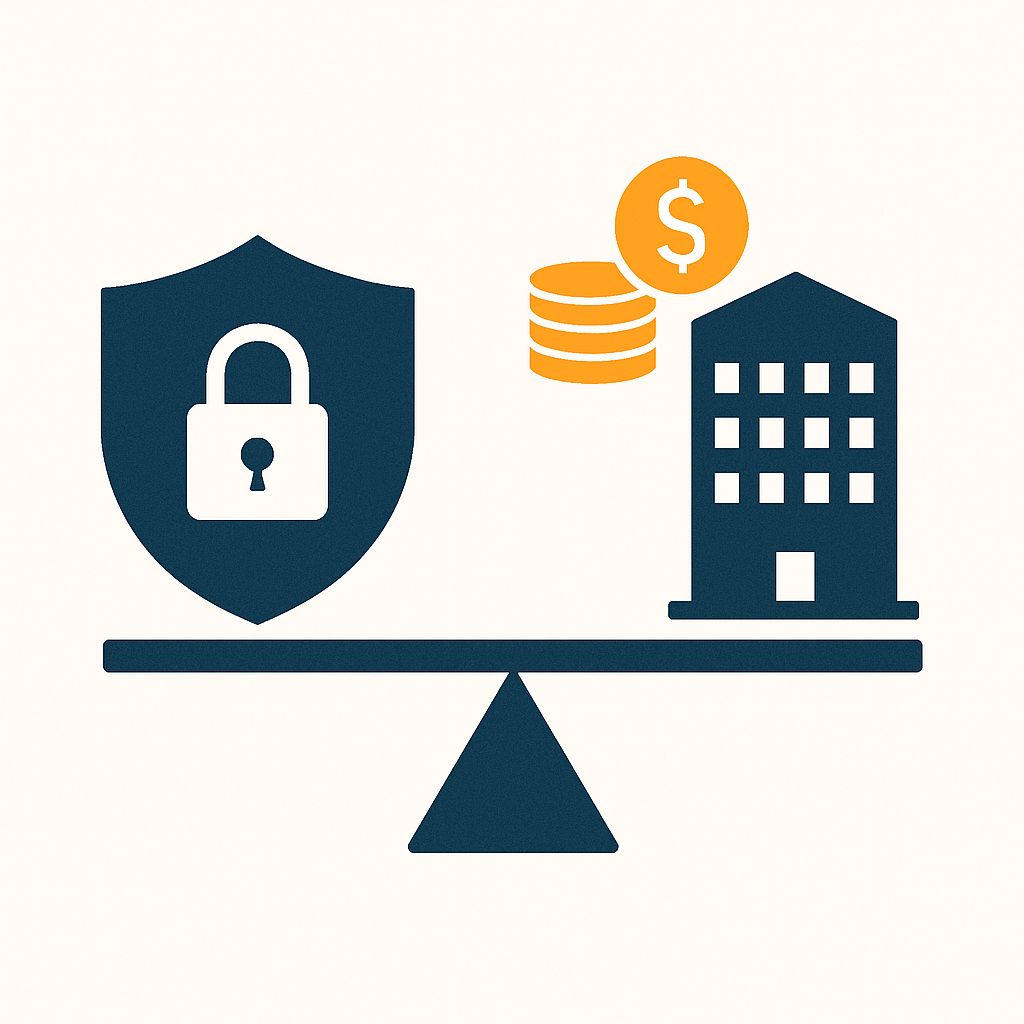
Too many companies treat cybersecurity as a cost they must bear — like insurance or compliance. This is wrong. Cybersecurity done right creates competitive advantage.
Companies that understand this are winning. They move faster, win more contracts, and enter new markets whilst their competitors stay paralysed by security fears.
Security Enables Business Growth
Strong security lets you do three things:
- Move faster. When your systems are secure by design, you can launch new products without months of security reviews. You can integrate acquisitions without data protection delays. You can adopt new technologies before competitors.
- Win customer trust. Customers choose suppliers based on data protection. Show them strong security and they’ll share more data, buy more services, and stay loyal longer. One major breach destroys years of trust-building.
- Access new markets. Want to sell to government? You need security certifications. Expanding to Europe? You need GDPR compliance. Partnering with large enterprises? They’ll audit your security first. Strong security opens doors that weak security keeps locked.
The Numbers That Matter
Security’s value is hard to measure because success means nothing happens. But companies track business figures that matter:
| Risk Reduction | If a breach would cost £5 million and security controls reduce that risk by 80%, those controls are worth £4 million in avoided losses. |
| Revenue Protection | Track how much revenue depends on customer data. That’s what you’re protecting. |
| New Business Enabled | Count deals won because of security credentials, markets entered through compliance, partnerships enabled by trusted security. |
| Cost Savings | Automated security reduces manual work. Good security lowers insurance premiums. Fewer breaches mean fewer crisis management costs. |
The Gordon-Loeb model suggests investing up to 37% of potential losses in security. This prevents over-spending on controls with minimal benefit.
Making the Case to Boards
Boards care about profit, growth, and risk — not firewalls and antivirus. This is why we frame security in their language:
- “Investing £500,000 in phishing protection avoids £4 million exposure to business email compromise”
- “Our security strength lags industry leaders, limiting partnership opportunities”
- “This compliance investment opens a £50 million market we currently cannot enter”
Three Investment Horizons
Break large security programmes into phases:
| Phase | Timescale | Description |
|---|---|---|
| Horizon-1 Core Protection | 6-12 months | Basic controls that prevent common attacks. Measure success through incident reduction and audit results. |
| Horizon-2 Competitive Advantage | 12-24 months | Advanced capabilities that differentiate you from competitors. Track new partnerships and customer acquisition. |
| Horizon-3 Strategic Innovation | 24-36 months | Emerging technologies that enable new business models. Measure through new revenue streams and market leadership. |
What Leaders Must Do
- Align security with strategy. Every major initiative — acquisitions, new markets, product launches — needs security built in from the start.
- Track business metrics. Replace technical dashboards with business ones showing “revenue protected” and “opportunities enabled.”
- Develop, or hire, business-minded security leaders. Technical experts who cannot speak commercial language will not drive strategic value.
- Foster collaboration. Security and business teams must work together to identify where strong security creates an edge over rivals.
The Bottom Line
The question is not “How much should we spend on security?”
It is “What business opportunities does security unlock?”
Security supports acquisitions by protecting due diligence data. It reassures regulators before market expansion. It reduces operational risk in negotiations. It can even lower cost of capital when lenders assess cyber risk.
Companies making this shift are not just protecting their future — they are building it. The rest will find themselves locked out of opportunities their more secure competitors can pursue.
Your choice is simple: treat security as strategic investment or watch competitors pull ahead.
 Curious About
Leave a comment