Key Takeaways
- Causal AI moves beyond pattern recognition to reveal the actual mechanisms driving business outcomes, transforming how companies make strategic decisions – the ‘why’, not just the ‘what’.
- Unlike correlation-based systems, causal AI can simulate complex business scenarios and predict outcomes when market conditions change – reliable ‘what if’ analyses.
- Causal AI reveals how variables connect and why actions produce results, meeting regulatory requirements while building stakeholder trust – transparent, explainable insights.
For some time now, businesses have used artificial intelligence to spot patterns, predict trends and streamline operations. From Netflix’s recommendation engine to Amazon’s supply‑chain algorithms, these systems mine massive datasets to deliver remarkable results. But these successes hide a basic problem: just because two things happen together doesn’t mean one causes the other – a limitation that Causal AI is poised to overcome, transforming business intelligence.
Spotting patterns is just the start – understanding why those patterns emerge is the real game-changer.
When correlation misleads
Imagine that your marketing team launches a new campaign and observes a 15% sales boost. Correlation-based AI systems see this as a positive connection and recommend similar campaigns. But did the campaign actually cause the sales increase, or was the timing just a coincidence?
Maybe a competitor suffered a data breach that week; seasonal demand spiked; or customers had already planned purchases. Without understanding true cause-and-effect relationships, companies waste money on campaigns that just happen to coincide with customer purchases, rather than actually driving results.
This illustrates a problem that permeates every business function. The same flawed reasoning that leads to ineffective advertising campaigns also undermines pricing strategies, supply chain decisions, and strategic planning.
Pricing algorithms work using historical price-demand connections whilst ignoring the competitive forces that drive customer behaviour. Supply-chain systems predict problems from past patterns but fail dramatically when new events (like pandemics or blocked shipping lanes) disrupt the cause-and-effect structures the systems never understood.
The core problem is that correlation-based AI treats the world as a black box. Feed it enough data and it reveals patterns. This works well in stable conditions but fails completely when things change, because yesterday’s connections may not apply tomorrow.
The causal difference
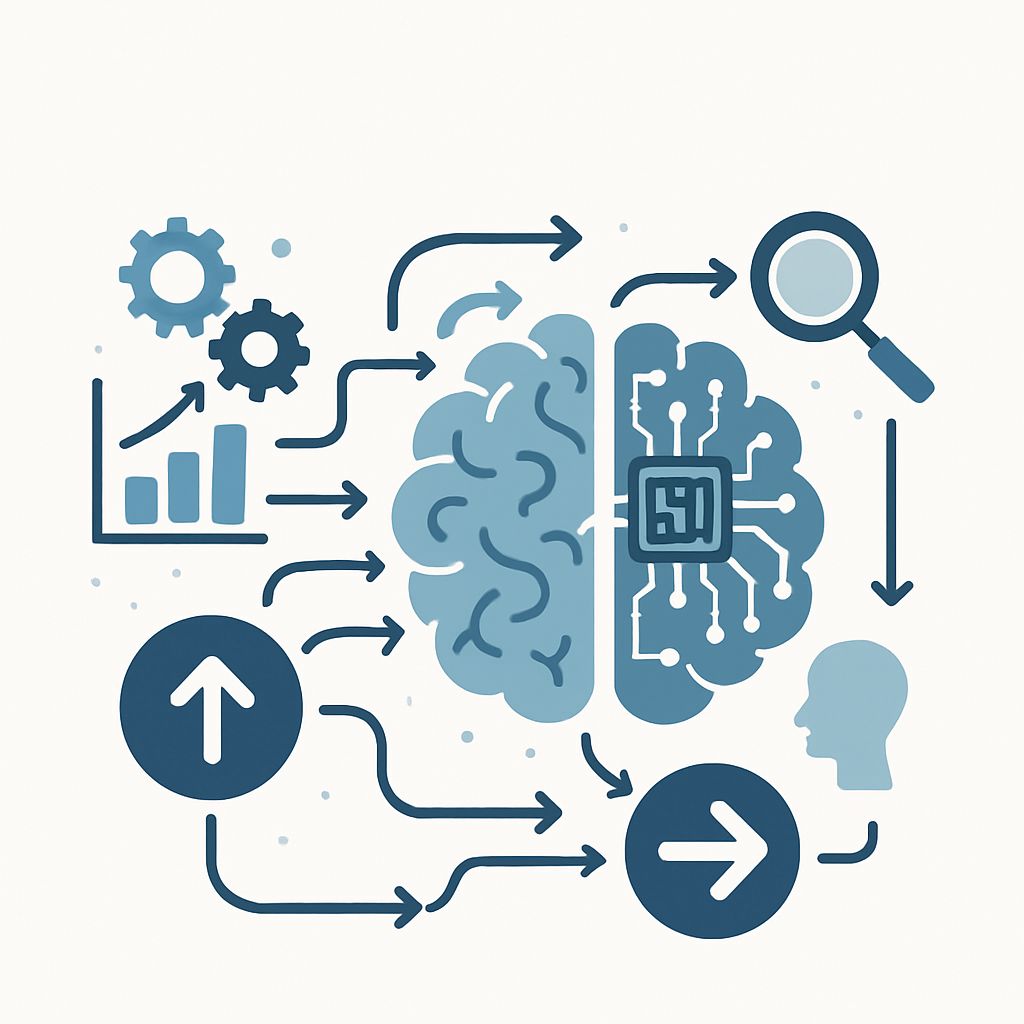
Causal AI takes a different approach. Instead of simply finding statistical relationships, it tries to model the actual mechanisms that create business outcomes. This transforms AI from describing past events to evaluating future scenarios.
Consider the difference: a correlation-based AI system might observe that customers who receive email newsletters spend 20% more money. A causal AI system would work out whether those newsletters actually drive additional spending or simply reach customers already inclined to purchase more. One insight wastes marketing budgets; the other creates growth opportunities.
This lets you run ‘what-if’ scenarios that capture complex feedback loops. What would sales have been without that campaign? How would a price change actually affect market share once competitors respond? What is the true impact of improving customer service on long-term profitability?
Transforming operations
Causal AI can transform business operations across multiple functions, delivering measurable improvements in efficiency and effectiveness, e.g.:
Marketing and Customer Acquisition
Companies waste billions annually on advertising that reaches customers who would have bought anyway. Causal AI identifies which marketing activities actually drive additional purchases versus those that simply correlate with existing buying intent.
Strategic Planning and Forecasting
Correlation-based AI forecasting models fail when market conditions shift because they rely on historical correlations that may no longer apply. Causal AI models adapt their predictions by understanding the underlying mechanisms that drive business outcomes. This allows companies to maintain forecast accuracy even during periods of significant market disruption.
Operational Optimisation
Supply chain managers can distinguish between factors that actually cause delays versus those that simply occur simultaneously. Pricing teams can model how competitive responses will affect market share, rather than relying on historical price-demand relationships that may not hold under new conditions.
The transparency advantage
One of causal AI’s most compelling advantages is its inherent transparency. While correlation-based AI models excel at prediction, they operate as ‘black boxes’ that undermine trust and hinder action in high-stakes decisions.
Causal AI solves this problem by revealing how variables connect and why specific actions yield certain outcomes. This explainability becomes crucial when executives need to justify strategic decisions or when regulators demand accountability.
The transparency advantage proves especially valuable in regulated industries. Financial institutions can explain credit decisions, healthcare providers can justify diagnostic recommendations, and HR departments can demonstrate fair hiring practices. In these sectors, the ability to understand and justify AI-driven decisions isn’t just desirable – it’s often legally required.
This shift toward explainable AI helps companies meet compliance requirements while building greater stakeholder trust in automated decision-making.
Navigating uncertainty
The business world’s constant change demands rapid responses to shifting conditions. Correlation-based AI models struggle with rapid market shifts, but causal AI navigates uncertainty more effectively.
By understanding how different factors influence one another, causal AI allows companies to adjust strategies in real time. Moreover, causal models help businesses anticipate future changes with greater accuracy. By modelling cause-and-effect relationships within their markets, companies can predict how shifts in one area might ripple through their entire operation, providing strategic advantages in timing and resource allocation.
The practical challenges
Yet companies cannot transform to causal AI overnight or without significant costs. Companies need different skills and mindsets than correlation-based AI requires. Data scientists must become comfortable with causal inference methods (determining whether a relationship is cause-and-effect, coincidence, or correlation); a discipline more like experimental design than pattern recognition. Business leaders must invest considerable time working out theories about how their organisations actually function, a prerequisite for building effective causal models.
Causal AI also demands substantial computing resources. For smaller companies, the investment may initially outweigh the benefits.
Furthermore, causal AI performs best with high-quality, structured data. Companies with poor data management must invest heavily in data infrastructure before causal AI delivers benefits.
The coming advantage
Companies that master causal reasoning will enjoy sustained competitive advantages. They will make better decisions under uncertainty, adapt more quickly to changing conditions and identify intervention opportunities that rivals miss. This delivers more than gradual improvement in analytical capability; it is a major leap towards systems that can reason about strategic alternatives rather than merely recognise historical patterns.
The shift also reflects a deeper philosophical change in business decision-making. Correlation-based AI embodies a purely data-driven worldview where data patterns reveal truth. Causal AI incorporates elements of theoretical reasoning, requiring organisations to develop hypotheses about how their business systems work and test these against evidence. This combined approach mirrors how experienced executives actually make decisions, combining pattern recognition with causal intuition.
From prediction to understanding
The era of pattern-matching AI is ending as causal understanding begins. In a world where businesses drown in data yet starve for insight, causal AI offers genuine understanding of the mechanisms that drive success.
Companies that embrace this shift early will gain decisive advantages in strategic decision-making. Those that delay risk falling behind competitors who understand causation, not just correlation.
The future belongs to businesses that understand not just what happens, but why it happens – and more importantly, how to make the right things happen. Tomorrow’s winners won’t just see what happened; they’ll know why, and how to make it happen again.
If you’d like more background on causal AI, and causal inference, here is a report that I co-authored with my good friend Sudeep Kesh (with the excellent design and editorial skills of Cat VanVliet and Paul Whitfield) while working at S&P Global.
 Curious About
Leave a comment